
When ice starts tasting strange, customers notice fast. A drink can be made with clean water, fresh ingredients, and proper service, but bad-tasting ice can still leave a chemical, metallic, musty, or stale aftertaste.
In food service, ice quality shows up directly in the drink. When ice tastes chemical, metallic, stale, or musty, customers may notice the problem before anyone thinks to check the machine, bin, filter, or cleaning schedule.
A strange taste or smell can be the first sign that the machine needs attention. Below, we’ll break down what different ice tastes and smells can mean, and how to know when your ice machine needs professional cleaning.
Why Does My Ice Taste Bad?
Bad-tasting ice usually means something is affecting the water after it enters the ice machine. That can happen inside the filter, water line, freezing area, storage bin, or around the machine if it sits near grease, food prep, yeast, or strong kitchen odors.
From our experience with commercial ice machines, the problem is often not one obvious failure. It is usually buildup, poor filtration, stale ice, or a cleaning issue that slowly changes the ice’s taste and smell. Common reasons ice starts tasting bad include:
- Old or clogged water filter;
- Scale buildup from hard water;
- Biofilm, slime, mold, or bacteria inside the machine;
- Dirty ice bin or contaminated scoop;
- Contaminated water line;
- Airborne grease, yeast, dust, or kitchen odors;
- Stagnant or stale ice sitting in the bin too long.
For a restaurant, bar, hotel, or food service business, bad-tasting ice can show up in the drink before anyone sees the machine. A guest will not know whether the problem came from the filter, bin, drain area, or stale ice. They will only notice that the drink tasted off, and that can turn a maintenance issue into a review problem fast.
Bad taste alone does not prove the ice is unsafe. But if the taste comes with a musty smell, visible residue, slime, particles, or dirty-looking ice, it should be treated as a sanitation concern. According to the FDA, ice must be produced, held, and transported in clean and sanitary conditions, using properly cleaned and maintained equipment and safe water. Food safety guidance also recommends regular checks for mould and other contaminants inside ice machines, along with clean utensils and proper storage practices.
Ice Tastes Bad, but Water is Fine: Why That Happens
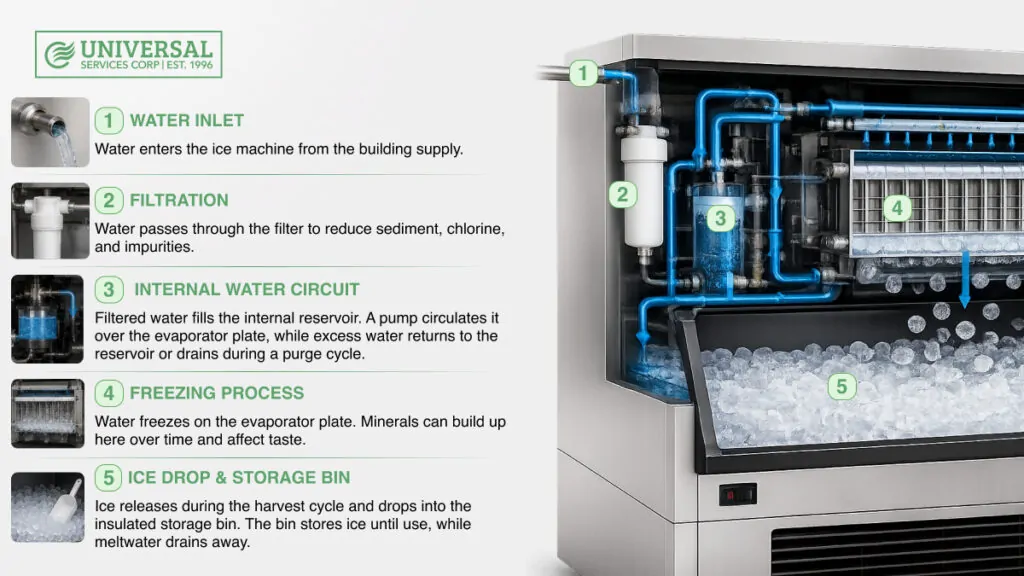
If your ice tastes bad but water is fine from the tap, the water itself may not be the whole problem. Before it freezes, water still passes through several parts of the system:
- Water enters the ice machine;
- It passes through the filter, water lines, and internal water circuit;
- It freezes on internal metal surfaces;
- Ice drops into the storage bin;
- It sits there until the staff uses it.
Taste can change at several points during ice production. A filter may be overdue for replacement. Minerals can leave scale on the freezing surface. Kitchen odors can settle around damp areas or get absorbed by stored ice. The bin also matters, especially when old ice, dirty scoops, or daily handling habits come into play.
Changing the filter can help, but it will not fix every source of bad-tasting ice. If the water tastes normal and the ice still tastes weird, the issue is likely somewhere between filtration, freezing, storage, and handling.
What Bad Ice Taste or Smell Can Mean
A strange taste or smell will not always point to one exact cause, but it can narrow the search. We created this table to help food service teams spot the most common warning signs before the problem turns into repeated customer complaints.
If ice has visible particles, slime, a strong odor, or residue in the bin, remove it from service until the machine is checked. A faint stale taste may come from old ice or odor absorption, but visible contamination should not be treated as a normal ice quality issue.
Signs Your Commercial Ice Machine Needs Cleaning
Bad taste is usually the first sign people notice, as it is the first thing that reaches them in the drink before they check the machine. That can become a customer complaint for a food service business in a hurry, particularly when the issue is visible in the water, cocktails, iced coffee, fountain drinks, or any other beverages where the ice is a direct part of the final product.
When the issue manifests in the ice, storage bin, machine operation, or when there are multiple complaints from staff and customers, a commercial ice machine may require cleaning or service.
Taste or Odor Changes in the Ice
Ice should not give a drink a stale, musty, sour, chemical, metallic, or freezer taste. If it does, the source could be in the machine, filter, bin, drain area, or storage process.
The problems can be easy to overlook initially, as the machine may still be producing ice. The problem is usually easier to understand when the cubes are dissolved in the drinks and alter the taste.
Visible Changes in the Ice or Bin
The following signs are typically easier to establish. If there are white flakes, black specks, brown particles, cloudy cubes, slushy ice, or debris in the glass after melting, it’s a sign that the machine needs attention.
The bin should be emptied at the same time. Slime, film, standing water, residue around corners, dirty scoop areas, or residue on removable parts should not be considered normal wear. If any residue is seen close to the ice, the batch should be taken out of service until the machine is checked.
Ice Production or Machine Behavior Changes
Cleaning problems are not always taste-related. Sometimes the machine just starts to behave differently. If the ice production is slower, if there are unusual noises, if there are leaks around the unit, if the condenser area is dusty or greasy, or if the unit runs longer than usual, it may indicate scale, airflow restriction, drainage issues, or internal buildup.
These signs matter because they often appear before a full breakdown. The ice machine may still be working, but it may no longer be producing clean, consistent ice under normal business demand.
Repeated Complaints Across Drinks, Shifts, or Batches
One complaint can be a one-off. Repeated complaints are different. If staff or customers keep noticing that drinks taste off, especially across different shifts or batches of ice, the machine should be checked instead of waiting for the next scheduled cleaning.
Customers will not know whether the issue came from the filter, bin, drain area, or stored ice. They will only notice that the drink tastes wrong.
What Dirty Ice Can Reveal About Your Ice Machine
Dirty ice is often missed because it does not always look obviously contaminated. During service, staff may see slightly cloudy cubes, a faint stale smell, or a few small flakes and assume the ice is still normal for a busy machine.
In food service, dirty ice usually points to poor filtration, residue in the bin, rough handling, scale, or buildup inside the machine. A cube can look clear enough at first glance and still leave a weird taste once it melts into a drink. Small flakes may be written off as minerals. A musty smell may get blamed on nearby food. Clumped ice may seem like a storage issue, not a cleaning warning. Instead of treating every symptom separately, it helps to group the signs by what the staff can actually check:
- Taste and odor: stale, musty, sour, metallic, chemical, or freezer-like ice.
- Particles or residue: white flakes, dark specks, slime, film, or debris left in the glass after the ice melts.
- Ice quality changes: cloudy, soft, misshapen, clumped, or fast-melting cubes.
- Bin and handling issues: residue around bin corners, dirty scoop areas, old ice mixed with fresh ice, or ice stored near strong kitchen odors.
Cloudy ice alone does not always mean dirty ice. Air and minerals can affect clarity. The concern grows when cloudy ice comes with odor, flakes, specks, residue, or repeated complaints about drinks tasting off.
Common Reasons Commercial Ice Starts Tasting Bad
Bad-tasting ice usually comes from one part of the ice-making process, not from the cube itself. The most common sources are filtration, scale, internal buildup, storage, drainage, and the environment around the machine.
In commercial kitchens, our technicians usually analyze the full ice-making process and the conditions around the machine before blaming one part. A new filter may help, but it will not remove scale from the evaporator, clean a dirty bin, fix a drain odor, or stop kitchen air from affecting stored ice.
Old or Clogged Water Filter
A water filter can change the taste of ice long before the machine stops working. When the filter is overdue, it may stop reducing chlorine taste, sediment, minerals, or other water quality issues as effectively as it should.
This is one of the reasons ice from an ice maker tastes bad even when the machine still produces a normal amount of it. The cubes may taste chemical, flat, stale, or slightly metallic. During service, staff may notice it first in plain water, cocktails, iced coffee, or fountain drinks where the ice is easier to detect.
Scale Buildup from Hard Water
Hard water leaves mineral deposits inside the machine. Over time, that scale can collect on the evaporator plate, water distribution parts, and other internal surfaces.
Scale does not always create a strong smell, but it can affect ice quality. Cubes may look cloudy, contain white flakes, melt unevenly, or carry a mineral taste. The machine may also start operating at a higher capacity, increasing its electricity consumption in order to produce the same amount of ice.
Proper descaling removes mineral buildup from the parts that regular wiping cannot reach. The process should follow the cleaning products, contact time, and steps approved for the specific ice machine model.
Biofilm, Slime, Mold, or Bacteria
Musty or earthy ice usually points to something more specific than “bad water.” In commercial ice machines, buildup often collects in places staff do not check during a quick wipe-down: bin corners, gaskets, removable parts, drain areas, and surfaces around the water flow.
It may start with a sour smell when someone opens the bin. Then a thin film shows up on plastic parts, or the ice keeps tasting stale even after the filter has been replaced. Sometimes the only clue is small particles left in a drink after the cubes melt.
This type of problem tends to build slowly. By the time the ice starts tasting weird, the machine may already need a proper cleaning and sanitizing cycle rather than another surface-level rinse.
Dirty Ice Bin or Poor Ice Handling
The bin is easy to overlook because it does not look as technical as the machine itself. Still, this is where finished ice sits before it reaches a customer’s drink.
Old ice, dirty scoops, cups used instead of scoops, and residue inside the bin can all affect taste and odor. NYC Health Code Article 81 requires ice for consumption to be dispensed with scoops, tongs, other utensils, or automatic self-service ice-dispensing equipment.
During service, the ice scoop should be used only for ice and stored in a clean place between uses. NYC inspection guidance even lists an in-use ice scoop stored on top of an ice machine as an example of improper utensil storage.
Stored ice can also absorb smells from nearby food prep, syrups, grease, trash areas, or strong kitchen odors. Even when the machine itself is clean, poor bin habits can still make ice taste off.
Contaminated Water Line or Drain Problems
If bad taste or odor keeps coming back after filter replacement and bin cleaning, the issue may sit deeper in the system. Water lines, valves, and drain areas can hold residue, mineral buildup, or stagnant water.
Drain odors are especially frustrating because they can make the ice smell bad even when the ice-making parts look acceptable at first glance. Staff may describe the smell as sour, musty, or almost sulfur-like.
Airborne Grease, Yeast, Dust, and Kitchen Odors
Commercial ice machines often work in rough environments. A busy kitchen, bakery, prep area, or bar is full of airborne particles that would never be present in a clean test room.
Grease, yeast, flour dust, smoke, and strong food odors can settle around vents, damp surfaces, and storage areas. If the machine is close to cooking equipment, prep stations, trash areas, or open food storage, the ice may start picking up smells from the room.
The machine may be making ice correctly. The environment around it may be working against it.
What to Do When Ice Tastes or Smells Bad
If ice tastes bad, smells strange, or shows visible particles, do not keep serving it while you “wait and see.” In a commercial setting, the first step is to remove the questionable ice from service. Use this quick checklist below:
- Stop serving ice from that machine.
Use another approved ice source until the issue is checked. - Empty the ice bin.
Do not mix old ice with a fresh batch. If the bin is part of the problem, new ice can pick up the same odor or residue. - Check the filter date.
An overdue filter can affect taste, odor, and ice clarity. - Look for obvious warning signs.
Check the bin, scoop area, visible surfaces, and nearby drain area for slime, scale, debris, standing water, or unusual odor. - Discard the first batches after cleaning or filter replacement.
This helps remove loose residue, trapped odors, or anything left in the system after service. - Schedule professional cleaning if the issue returns.
Bad taste, smell, cloudy ice, flakes, or particles that come back after basic checks usually point to a deeper cleaning or maintenance issue.
Do not rely on taste alone. If staff notice a smell when opening the bin, residue on surfaces, or particles in drinks after the ice melts, the machine needs attention before it goes back into regular service.
Why Professional Ice Machine Cleaning Matters
When bad taste or odor keeps coming back, the source is often beyond the area’s staff clean during daily routines. Buildup can sit around the evaporator, behind removable parts, near the drain, inside the bin, or along parts of the water path.
A quick clean may improve the first batches, but the taste can return if scale, bin odor, drain residue, or an overdue filter are still affecting the machine. At Universal Services Corp., our technicians check the machine as a whole rather than treating every taste complaint as a simple filter issue.
Our professional team provides commercial ice machine cleaning for restaurants, bars, hotels, and food service businesses across NYC. Schedule a service visit if your ice still tastes strange, smells bad, or shows signs of residue after cleaning.
When the Next Scheduled Cleaning Is Too Late
The cleaning schedule should start with the manufacturer’s instructions. For many commercial ice machines, deep cleaning about every six months is a common baseline, although heavy use, hard water, grease, yeast, dust, or poor water quality can shorten that interval.
Bad-tasting ice should not wait for the next scheduled cleaning. If the ice smells musty, leaves flakes in drinks, looks cloudy, or starts coming out slower than usual, the machine may need service sooner.
Conclusion
Bad-tasting ice is easy to dismiss at first, especially when the water itself tastes fine. In a commercial ice machine, though, the final ice quality depends on more than the water supply. Filtration, scale, storage, handling, drain conditions, and the area around the machine can all change what ends up in the glass.
If ice smells musty, tastes chemical or metallic, leaves flakes in drinks, or keeps getting complaints from staff or customers, do not wait for a less busy period to deal with it. Remove the questionable ice from service, check the obvious warning signs, and schedule cleaning if the problem keeps coming back. At Universal Services Corp., our team helps NYC restaurants, bars, hotels, and food service businesses address the machine, bin, filtration, and hidden buildup behind recurring ice taste or odor problems.
Frequently Asked Questions
Why does my ice taste bad but water is fine?
Tap water may taste normal because it does not pass through the ice machine’s filter, internal water path, freezing surface, storage bin, and scoop area. If the taste changes only after the water becomes ice, the problem is usually somewhere inside the machine or its storage process.
Why does my ice taste like chemicals?
A chemical taste often points to chlorine, an overdue filter, cleaning residue, or poor flushing after service. If the taste appeared after maintenance, stop using that batch and have the machine checked before serving more ice.
Can mold grow on ice?
Mold usually does not grow inside an ice cube the way it grows on bread or fruit. The concern is more often the machine around the ice, including the bin, gaskets, drain area, removable parts, or surfaces near the water flow. If ice smells musty, leaves particles in drinks, or comes from a bin with visible residue, stop using that batch until the machine is cleaned and inspected.
Why does my ice taste like metal?
A metallic taste can come from minerals, scale buildup, older water lines, or worn internal parts. If replacing the filter does not solve it, the machine may need a closer inspection
Is smelly ice bad for you?
Smelly ice should not be served, especially if the odor is musty, sour, chemical, or dirty. The smell does not prove one exact problem, but it is enough reason to pause use of that machine and check the source.
Does ice go bad?
Ice does not spoil like fresh food, but it can go stale, absorb odors, collect particles, or become contaminated during storage and handling. In food service, old or bad-smelling ice should be discarded.
How do I make ice taste better?
Replace overdue filters, clean and sanitize the bin, discard old ice, keep the scoop clean, check the water line, and schedule professional descaling and sanitizing if the taste returns.