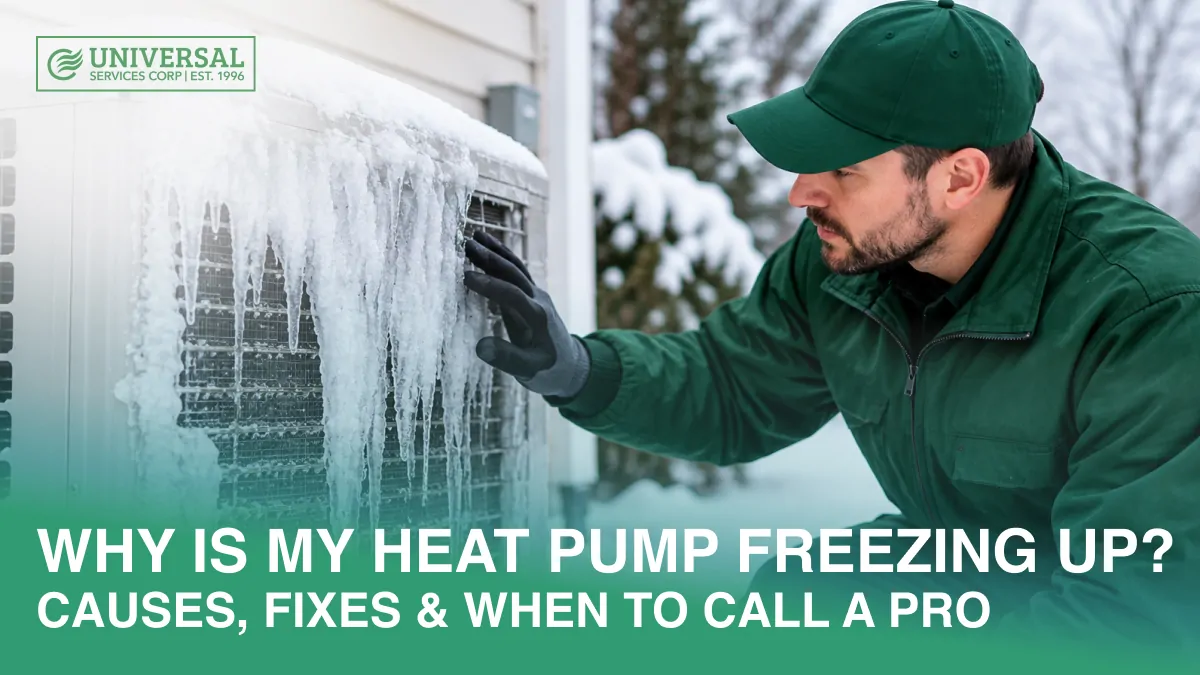
Heat pumps freeze up in winter when moisture in cold outdoor air condenses and turns to ice on the outdoor coil — and in most cases, that’s completely normal. Heat pumps handle this with a built-in defrost cycle that automatically melts the ice every 30 to 90 minutes. The problem is when that cycle fails, or when ice builds up faster than the system can clear it, leaving the unit fully encased for hours.
Below, we’ll break down what causes heat pump to freeze up, in what cases frost on your unit can be normal, and how to fix or prevent it. Read this guide so you know exactly what to do the next time you spot ice on your unit.
Is It Normal for a Heat Pump to Freeze in Winter?
Yes — sometimes a heat pump iced up during winter is normal, and it comes from how the system works, not a defect. As refrigerant absorbs heat from the outdoor air, it passes through the outdoor coil and cools it enough that moisture in the air condenses and freezes on contact, especially in cold, damp climates.
To handle this, heat pumps include a built-in defrost cycle that automatically starts melting
accumulated ice before it becomes a problem.
Most systems trigger it one of two ways:
- Sensor-based: temperature or frost sensors detect ice buildup and kick off defrost automatically
- Timer-based: the compressor runs for a set interval (typically 30 minutes to 2 hours, depending on the manufacturer) before defrost engages regardless of sensor input
Once triggered, the defrost cycle usually runs for 10 minutes or less, which is enough to clear normal frost. If your heat pump is doing this every hour or two and clearing the ice each time, it’s working exactly as designed.
What Happens If a Heat Pump Freezes Up? 5 Effects to Watch For
If ice on your heat pump isn’t clearing on its own, it stops being harmless and starts costing you in efficiency, comfort, and equipment life. Here are several negative effects of heat pump freezing up in cold weather causes:
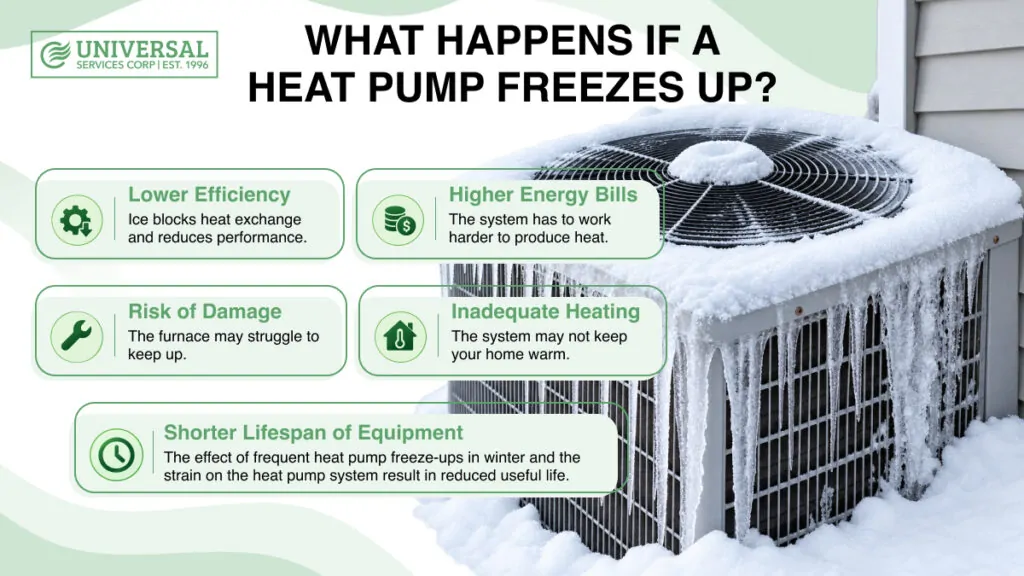
- Reduced Efficiency
Ice buildup on the heat pump’s coils blocks heat exchange. This reduces the system’s heating efficiency, resulting in increased energy consumption.
- Increased Operating Costs
Because of the reduced heating capacity, the heat pump needs to work longer to compensate for decreased efficiency, resulting in higher energy bills.
- Risk of Damage
Repeated freeze-thaw cycles can damage the heat pump’s mechanical parts like the fan blades, refrigerant, and coils, which causes extra costs.
- Inadequate Heating
In severe cases, extensive ice buildup can cause the heat pump system to completely shut down or deliver inadequate heating, leaving your home cold.
- Shorter Lifespan of Equipment
The effect of frequent heat pump freeze-ups in winter and the strain on the heat pump system result in reduced useful life.
If you’re seeing more than one of these, it’s a sign the freezing has moved past “normal” and needs an HVAC technician’s diagnostics.
What Causes a Heat Pump to Freeze Up in Winter?
Although it’s not unusual for a heat pump to accumulate some ice — especially when there’s snow or freezing rain, and the outside temperature drops below 40°F — a heat pump completely encased in ice for several hours is a big problem. It can cause the system to malfunction or fail to start at all.
Here are some of the most common causes of a heat pump freezing up in the winter:
1. Dirty or Clogged Air Filter
Restricts airflow into the system, forcing the coil to run colder than it should and accelerating ice buildup. It’s the single most common cause and also the easiest to prevent; filters should be checked or changed every 1-2 months.
2. Low Refrigerant Levels
Insufficient refrigerant drops the coil’s surface temperature, causing moisture in the air to freeze on contact. This typically points to a leak and needs a licensed technician to locate and repair.
3. Malfunctioning Defrost Cycle
The defrost cycle is what clears normal ice automatically; when it fails, ice keeps accumulating instead of melting off on schedule. Most often, it fails due to a bad sensor, a control board issue, low refrigerant, or incorrect thermostat settings.
4. Restricted Airflow Around the Coil
Beyond a dirty filter, airflow can also be blocked by dirty indoor/outdoor coils, debris around the unit, or, in ducted systems, undersized ductwork. Any of these starve the coil of the air movement it needs to stay above freezing.
5. Outdoor Temperature Extremes
Extremely cold temperatures, particularly below 30°F, can overwhelm a heat pump that isn’t designed to operate efficiently in such conditions. In these situations, the system may struggle to extract heat from the outside air, causing ice to form on the outdoor coil. Rain, snow, or sleet combined with low temperatures can exacerbate the freezing problem.
6. Faulty Reversing Valve
The reversing valve allows a heat pump to switch seamlessly between heating and cooling modes. If the reversing valve malfunctions, the defrost cycle may fail to engage properly, causing ice to accumulate on the coil and tubing.
7. Damaged Fan Motor
A damaged or malfunctioning fan motor can prevent the outdoor fan from properly circulating air over the condenser coil. Without sufficient airflow, the condenser coil’s temperature drops too low, leading to ice buildup. This lack of airflow may significantly reduce the heat pump’s heating capacity.
8. Excess Moisture
Excess moisture can also contribute to a frozen heat pump. For example, water from a leaking gutter or pooling around the outdoor unit can introduce moisture into the system, causing the heat pump to freeze. When the unit is submerged in or surrounded by standing water, ice forms more quickly, obstructing airflow and further impairing the heat pump’s performance.
How to Fix a Heat Pump Freezing Up: Step-by-Step Guide
If you spot a frozen heat pump, start with these immediate steps:
- Turn off the system to prevent additional strain while ice is present.
- Let the ice melt naturally, or speed it up with warm (not hot) water — never use a hairdryer, heat gun, or other high-heat tool, which can damage components.
- Check and replace the air filter if it’s dirty or clogged.
- Clear snow, ice, or debris from around the outdoor unit to restore normal airflow.
If the heat pump is frosting up even after these steps, try to work through the following in order:
- Inspect the clearance around the outdoor unit. Make sure nothing is blocking airflow, and keep at least 12-18 inches of open space on all sides.
- Clean the indoor and outdoor coils. If either coil looks dirty, clean it with a gentle, non-acidic cleaner. We emphasize on a non-acidic cleaner because harsh chemicals can strip the coil’s protective coating and cause further damage.
- Check your thermostat settings. Confirm the settings are correct for heating mode. If the thermostat seems unresponsive or is reading temperatures inaccurately, it may be malfunctioning and preventing the defrost cycle from triggering — replace it if needed.
- Watch the blower motor and fan blades. Turn the system on briefly and listen for the fan cycling on and off intermittently or running slower than usual — both are signs of a failing blower motor. Also check the fan blades for buildup, since dirty blades reduce airflow and trap moisture. Clean the blades, or replace the blower motor if it isn’t running properly.
- Check for blocked drains. Look for standing water or ice inside the unit near the drain line, which signals a clog preventing moisture from draining away before it freezes. Clear the blockage if you can safely access it.
- Rule out refrigerant and the reversing valve last. If none of the steps above resolve the freezing, the cause is likely low refrigerant or a stuck reversing valve — both require a licensed HVAC technician to diagnose and repair safely.
When Heat Pump Freezing Requires Professional HVAC Repair
If you’ve worked through the DIY steps and your heat pump keeps freezing up, it’s time to call a qualified HVAC service provider rather than keep troubleshooting. We recommend reaching out if:
- Ice returns within a day or two of clearing it
- You see ice forming directly on the refrigerant lines or copper tubing (a common sign of low refrigerant)
- The blower motor is cycling on and off, running slower than normal, or not running at all
- The system won’t produce heat even after the ice has melted
- Freezing happens repeatedly through the season, not just during one severe cold snap
Refrigerant leaks, a stuck reversing valve, and defrost cycle electronics all require specialized tools and certification to diagnose safely — attempting these yourself risks further damage or, in the case of refrigerant, environmental and safety hazards. If any of these signs apply, schedule a repair with Universal Services Corp. rather than waiting to see if it resolves on its own.
| Cause | Can You DIY? | Fix |
| Dirty or clogged air filter | DIY | Check and replace the filter every 1-2 months |
| Snow ice or debris around the unit | DIY | Clear at least 12-18 inches of space on all sides |
| Dirty indoor/outdoor coils | DIY | Clean gently with a non-acidic coil cleaner |
| Incorrect or malfunctioning thermostat | DIY to check, pro to replace | Verify settings first; replace only if unresponsive or inaccurate |
| Failing blower motor or dirty fan blades | DIY to clean, pro to replace | Clean blades yourself; a cycling or a slow motor needs professional replacement |
| Blocked drain line | DIY if accessible | Clean visible clogs; persistent pooling needs a technician |
| Low refrigerant levels | Professional only | Requires leak detection, repair, and certified recharge |
| Stuck or faulty reversing valve | Professional only | Requires diagnosis and valve replacement |
| Malfunctioning defrost cycle (sensor/control board) | Professional only | Requires electrical diagnostics and component replacement |
| Extreme cold or severe weather conditions overwhelming the system | Not fixable, monitor only | May need a cold-climate-rated system upgrade if it happens often |
How to Prevent a Heat Pump Freezing Up in Winter
Preventing a frozen heat pump comes down to two things: professional tune-ups before winter starts, and simple DIY maintenance throughout the season.
Schedule an annual professional tune-up. An HVAC technician cleans and inspects all major components, tests the defrost cycle, checks refrigerant levels, and flags any repairs needed before cold weather sets in ― catching small issues like a minor coil leak before they turn into a fully frozen system mid-winter.
Between tune-ups, these DIY habits keep freezing at bay.
- Replace or clean the air filter every 2-3 months. A clogged filter is the single most common cause of restricted airflow, which directly leads to ice buildup on the coil.
- Keep the outdoor unit clear of debris. Leaves, twigs, and snow around the condenser block airflow and reduce the system’s ability to absorb heat — keep at least 12-18 inches of clearance on all sides.
- Check for leaks and standing water near the unit. A damaged gutter dripping onto the heat pump, or water pooling around its base, adds moisture that freezes on the coils and makes icing worse. Redirect drainage away from the unit if needed.
Staying on top of these three habits, paired with one professional tune-up a year, is usually enough to keep your heat pump running efficiently and ice-free all winter.
Heat Pump Repair with Professional HVAC Contractors
Seeking assistance to resolve issues with your heat pump freezing up in winter? Homeowners who live in NYC can rely on the seasoned HVAC experts at Universal Services Corp. Don’t let your home go long without adequate heat; contact us today to discuss how we can assist with your heat pump freezing or any other HVAC system needs.
FAQ
What should I do if my heat pump freezes up?
If your heat pump freezes, switch off the unit and check the air filters. Make sure they are clean. After that, allow the defrost cycle to run (either automatically or manually) so the ice melts. If the freezing continues for a long time, remove any obstructions around the outdoor unit. You should also check for blocked vents. If the freezing continues or you are not confident about these steps, get in touch with a qualified HVAC professional.
Is it okay to use my heat pump when it freezes?
Your heat pump can still be used even when it freezes. When this occurs, the defrost function ought to activate on its own. It should stop ice from spreading throughout the system. If this doesn’t occur and the freezing lasts a long time and is excessive, it means something is wrong.
It’s normal if your appliance is covered in snow. That’s fine as long as its internal components aren’t affected.
Why is my outside heat pump unit freezing up?
A heat pump may freeze up because of restricted airflow, low refrigerant, a dirty filter, blocked outdoor coils, or a malfunctioning defrost system
What should I do if my heat pump keeps freezing up in winter?
Clear snow and debris from the outdoor unit, check the air filter and airflow, and contact an HVAC professional if the unit continues to freeze up or has problems with defrosting.