A commercial refrigerator is essential for protecting your inventory, maintaining food safety and keeping your business running efficiently. Whether you operate a restaurant, grocery store, commercial kitchen, or any other kind of business that requires refrigeration of goods, it’s obligatory to have a refrigerator that maintains the proper temperature. Otherwise, you can end up with spoiled products, health code violations, and costly downtime. That’s why it’s crucial to monitor the temperature and resolve any issues, as soon as you see first signs of malfunction.
In this guide, we’ll cover 10 common reasons your commercial refrigerator is too warm, what may be causing the issue, and when it’s time to call a professional commercial refrigerator repair team.
Why Temperature Matters For Commercial Refrigerators
Maintaining the correct temperature in a commercial refrigerator means more than simply keeping goods cold — it’s essential for food safety, product quality, compliance with regulations, and your own operational standards as a business. Even a small increase ill temperature in your fridge can allow harmful bacteria to start multiplying, which usually leads to spoiled inventory and potential health risks.
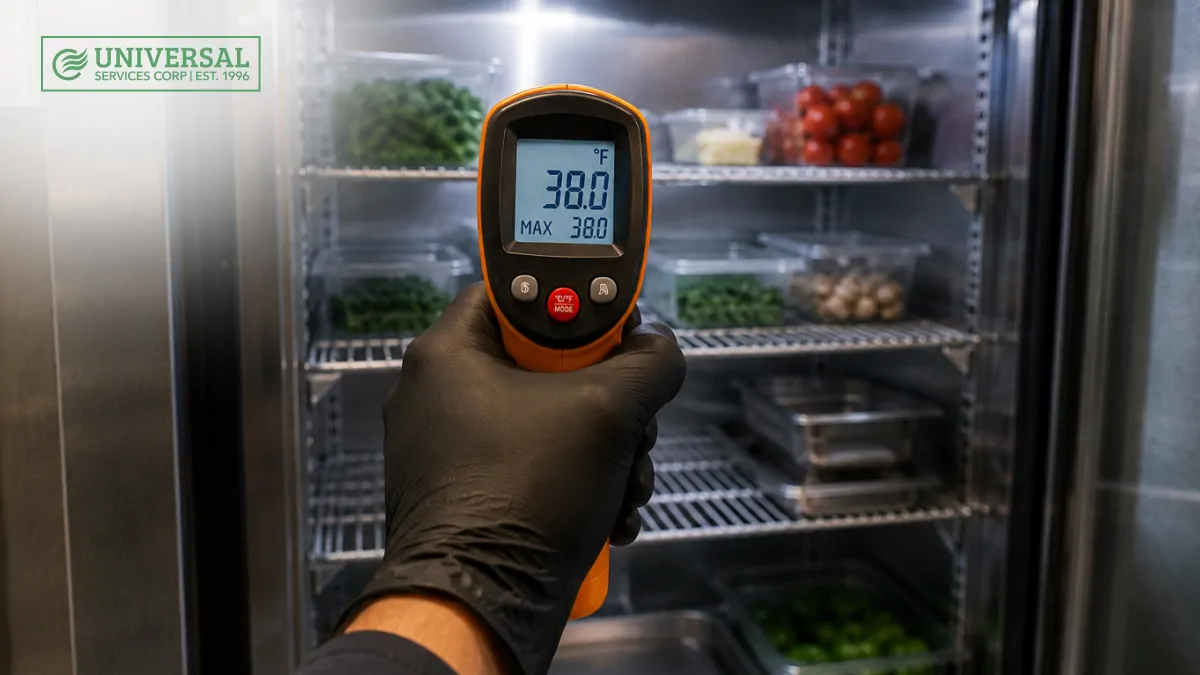
Let’s look at the legislative aspect of the problem too. According to the USDA’s Refrigeration and Food Safety guide, refrigerators should maintain temperatures at 40°F (4°C) or below to keep perishable foods out of the zone, where bacteria grow most quickly.
Here are the main reasons why your business need to ensure your refrigerator stays within the defined temperature zone and never gets warmer:
- Protecting Food Safety. Keeping products below 40°F slows bacterial growth and helps prevent foodborne illnesses.
- Preserving Product Quality. Proper refrigeration extends the shelf life of perishable products like meats, dairy, produce, beverages and prepared foods while maintaining freshness.
- Reduces Inventory Loss. Temperature fluctuations can spoil expensive inventory, forcing businesses to discard products and expand spending to replace them.
- Supports Health Code Compliance. Restaurants, grocery stores, and commercial kitchens must maintain safe storage temperatures to meet local health regulations and pass inspections.
- Improves Equipment Performance. If your fridge consistently runs too warm, it often indicates that there is a mechanical issue. It’s important to keep track of things like this to prevent major breakdowns, extend equipment life, and reduce costly emergency repairs.
10 Reasons Your Commercial Refrigerator Is Too Warm
1. Dirty Condenser Coil
Unclean condenser coils frequently keep commercial refrigerators warm. The purpose of the coils is to chill refrigerant, the substance that gives your refrigerator its cold air. Food spoiling and rising temperatures occur from the coils’ inability to operate correctly due to filth, dust, and grease accumulation. This can lead to higher energy bills, inconsistent temperatures, and spoiled inventory.
What to do: Clean your condenser coils at least every 2-3 months (or more often in kitchens and dusty environments). If the refrigerator is still running warm after cleaning, schedule a professional commercial refrigeration inspection.
2. Worn or Damaged Door Gaskets
Your refrigerator’s doors are crucial for keeping warm air out and cold air in. Every time they are closed, they are intended to create a seal. Your doors won’t close correctly and the seal will break if they are damaged.
The rubber gasket is the primary part of your door. The door won’t seal correctly if this becomes loose, cracks, or tears, or if the hinges are corroded or broken. A commercial refrigerator is frequently overheated due to poor seals, and the door cannot align and seal correctly due to loose or faulty hinges.
Signs to watch for: Condensation around the door, frost buildup, or doors that won’t close completely.
What to do: Replace worn gaskets and repair damaged hinges to restore an airtight seal and improve energy efficiency.
3. Evaporator Fan Issues
Problems with the evaporator, a crucial part of commercial freezers and chillers, could be another factor why your walk-in freezer is not holding temperature. The refrigerant can evaporate and cool the air because the evaporator within the refrigerator absorbs heat. The freezer may stay cool while the refrigerator becomes overheated if the evaporator or evaporator fan is malfunctioning.
This is especially crucial in commercial settings because food safety depends on a constant commercial refrigerator temperature. For instance, even if a commercial freezer’s temperature is adjusted appropriately, the refrigerator section’s temperature won’t be maintained if the evaporator breaks down.
Common symptoms: Uneven temperatures, warm product zones, unusual fan noises, or a freezer that stays cold while the refrigerator compartment warms up.
What to do: Have a commercial refrigeration technician inspect and repair the evaporator fan before food safety is compromised.
4. Blocked Airflow Inside the Refrigerator
Cold air travels from the freezer to the refrigerator through vents in many commercial refrigerator types used in industrial or restaurant settings. Food items or packaging obstructing these vents interrupt the flow, resulting in an excessively warm refrigerator temperature.
It’s essential to often inspect and make sure these vents are clear in commercial situations when the refrigerator’s commercial use is significant. For example, a walk-in cooler, which is a common fixture in restaurants, needs to be maintained on a regular basis to guarantee that its air vents and thermostat are clear for best results.
5. Thermostat or Temperature Sensor Failure
The refrigerator’s thermostat makes sense as a reason for warm refrigerators. Your refrigerator checks may indicate safe temperatures while the refrigerator is overheated since it measures the inside temperature. Generally speaking, a commercial refrigerator should be kept at 38°F (3.33°C). Your food is at risk of spoiling when your walk-in cooler thermostat malfunctions since the readings aren’t correct. Avoiding obstructing your thermostat by overstocking your refrigerator is the greatest method to make sure it gives accurate readings.
Signs of failure: Temperature fluctuations, inaccurate display readings, or food spoiling despite normal settings.
What to do: A technician can test the thermostat and replace faulty sensors to restore accurate temperature control.
6. Refrigerant Leak
Refrigerant is essential for removing heat from the refrigerator. If there’s a leak, the system loses its ability to cool effectively. Because refrigerant circulates in a sealed system, low refrigerant almost always indicates a leak that requires professional repair.
Common signs include:
- Refrigerator won’t reach the set temperature
- Ice buildup on evaporator coils
- Hissing or bubbling sounds
- Compressor running continuously
Refrigerant leaks should always be repaired by a licensed commercial refrigeration technician.
7. Dirty or Frozen Evaporator Coils
Evaporator coils absorb heat from inside the refrigerator. When they become coated with dirt or covered in ice, they can’t transfer heat efficiently, causing the refrigerator to warm up.
Frozen coils often indicate another underlying issue, such as restricted airflow, refrigerant problems, or a failing defrost system.
Professional diagnosis can identify the root cause before it leads to compressor damage.
8. Defrost System Malfunction
Commercial refrigerators with automatic defrost systems rely on heaters, sensors, and timers to prevent excessive ice buildup. If any part of the defrost system fails, ice accumulates on the evaporator coils, blocking airflow and reducing cooling performance.
Typical warning signs:
Heavy frost inside the unit
- Rising temperatures
- Poor airflow
- Water leaks after partial thawing
Repairing the defrost system early helps prevent more expensive refrigeration repairs.
9. Compressor Issues
Refrigerant is condensed using a compressor before it reaches the condenser coils. The refrigerator cannot effectively cool if it is malfunctioning. If your refrigerator is making loud noises or appears to be “running” constantly, it’s a solid indication that your compressor isn’t functioning. To prevent your industrial refrigerator from getting too hot, damaged compressors need to be fixed or replaced as soon as feasible.
10. Electrical Problems
Faulty wiring, damaged relays, failed capacitors, blown fuses, or control board issues can all prevent a commercial refrigerator from operating correctly. Electrical problems may cause intermittent cooling, unexpected shutdowns, or complete refrigeration failure.
Because electrical repairs involve high-voltage components, they should always be performed by qualified commercial refrigeration professionals.
Other Factors That Can Make Your Commercial Refrigerator Too Warm
- High Ambient Temperatures
Commercial refrigerators are designed to operate within a specific ambient temperature range. When the surrounding environment becomes excessively hot-such as in busy restaurant kitchens, warehouses, or poorly ventilated utility rooms-the refrigeration system must work much harder to remove heat. This extra strain can reduce cooling performance, increase energy consumption, and shorten the lifespan of critical components.
- Wrong Temperature Settings
Check the settings if you believe that your refrigerator is excessively warm. It may have accidentally been set to the incorrect temperature. You can easily modify it to the correct setting if this is the case. For most commercial refrigerators, the recommended storage temperature is 35°F-38°F (1.7°C-3.3°C).
- Improper Installation
Improper installation can prevent a commercial refrigerator from operating efficiently from day one. Insufficient clearance around the unit, uneven flooring, blocked ventilation openings, or incorrect electrical connections can all reduce cooling performance and place unnecessary strain on the compressor.
- Aging Equipment
It’s likely time for a new refrigerator if you consider all of these factors and your commercial refrigerator still doesn’t seem to be able to stay cool. When looking for a replacement, you can take into account a reasonably priced refurbished refrigerator. They have been fully renovated to provide effective operation, ample space and illumination, and a polished appearance that is perfect for your company.
- Unnecessary Opening
If your business refrigerator is left open all the time, it will not stay chilly. An orderly refrigerator can cut down on the amount of time employees spend keeping the door open in restaurants. When people can rapidly identify what they need, they will close the door sooner.
How to Prevent Commercial Refrigerator Temperature Problems
Preventive maintenance is the best way to avoid unexpected breakdowns, food spoilage, and costly emergency repairs. As commercial refrigeration technicians, we see many temperature issues that could have been prevented with regular care. Follow these five best practices to keep your refrigeration equipment operating efficiently.
1. Schedule Preventive Maintenance
Have your commercial refrigeration system professionally inspected at least twice a year. During a maintenance visit, technicians can clean coils, check refrigerant levels, inspect electrical components, test fans and thermostats, and identify worn parts before they fail. Preventive maintenance extends equipment life and helps prevent expensive downtime.
2. Clean Condenser Coils Regularly
Dirty condenser coils force the refrigeration system to work harder, reducing cooling performance and increasing energy consumption. In restaurants, commercial kitchens, and other grease-prone environments, coils should be cleaned every one to three months. Regular cleaning improves efficiency and helps maintain consistent temperatures.
3. Monitor Temperatures Every Day
Don’t rely solely on the refrigerator’s display. Use a calibrated thermometer to verify the internal temperature daily and keep a temperature log. Catching small temperature changes early allows you to address minor issues before they become major repairs or result in spoiled inventory.
4. Inspect Door Seals and Airflow
Check door gaskets regularly for cracks, tears, or gaps that allow cold air to escape. At the same time, avoid overloading shelves or blocking air vents, as restricted airflow can create warm spots throughout the refrigerator. Proper airflow is essential for maintaining safe, even temperatures.
5. Address Problems Immediately
If you notice unusual noises, frequent cycling, rising temperatures, frost buildup, water leaks, or higher energy bills, don’t ignore them. These are often early warning signs of developing refrigeration problems. Prompt repairs are typically less expensive than waiting for a complete system failure and can help protect both your inventory and your equipment investment.
When to Call a Commercial Refrigerator Repair Company
If your commercial refrigerator is running too warm, making unusual noises, cycling constantly, or struggling to maintain safe temperatures, don’t wait until a minor issue turns into a costly breakdown. It may be time to hire a professional technician if you’ve attempted these do-it-yourself solutions and your industrial refrigerator is still not cooling effectively. They are capable of identifying and resolving more complicated problems that are outside the purview of standard do-it-yourself fixes, such as refrigerant leakage, compressor troubles, or electrical malfunctions.
At Universal Services Corp., our experienced commercial refrigeration technicians diagnose and repair cooling problems quickly to minimize downtime and protect your inventory. We also provide preventive maintenance services to help improve energy efficiency, extend the life of your equipment, and reduce the risk of unexpected failures. Whether you need emergency commercial refrigerator repair or routine maintenance, Universal Services Corp. is here to keep your refrigeration system operating at peak performance.
FAQ
Why is my commercial refrigerator running but not cooling?
A commercial refrigerator may run without cooling because of dirty condenser coils, a faulty evaporator fan, a refrigerant leak, blocked airflow, a malfunctioning thermostat, or compressor problems. If cleaning the coils and checking the temperature settings don’t resolve the issue, a professional commercial refrigeration technician should inspect the system to prevent food spoilage and equipment damage.
What temperature should a commercial refrigerator be?
Most commercial refrigerators should maintain an internal temperature between 35°F and 38°F (1.7°C to 3.3°C) to keep perishable foods safe while preserving freshness and complying with food safety regulations. Regularly monitoring the temperature with a calibrated thermometer helps ensure the unit is operating correctly.
How often should a commercial refrigerator be serviced?
Most manufacturers and HVAC professionals recommend preventive maintenance at least twice a year. Regular service includes cleaning condenser coils, checking refrigerant levels, inspecting electrical components, testing fans and thermostats, and replacing worn parts before they cause costly breakdowns. Routine maintenance improves energy efficiency, extends equipment life, and reduces the risk of unexpected repairs.